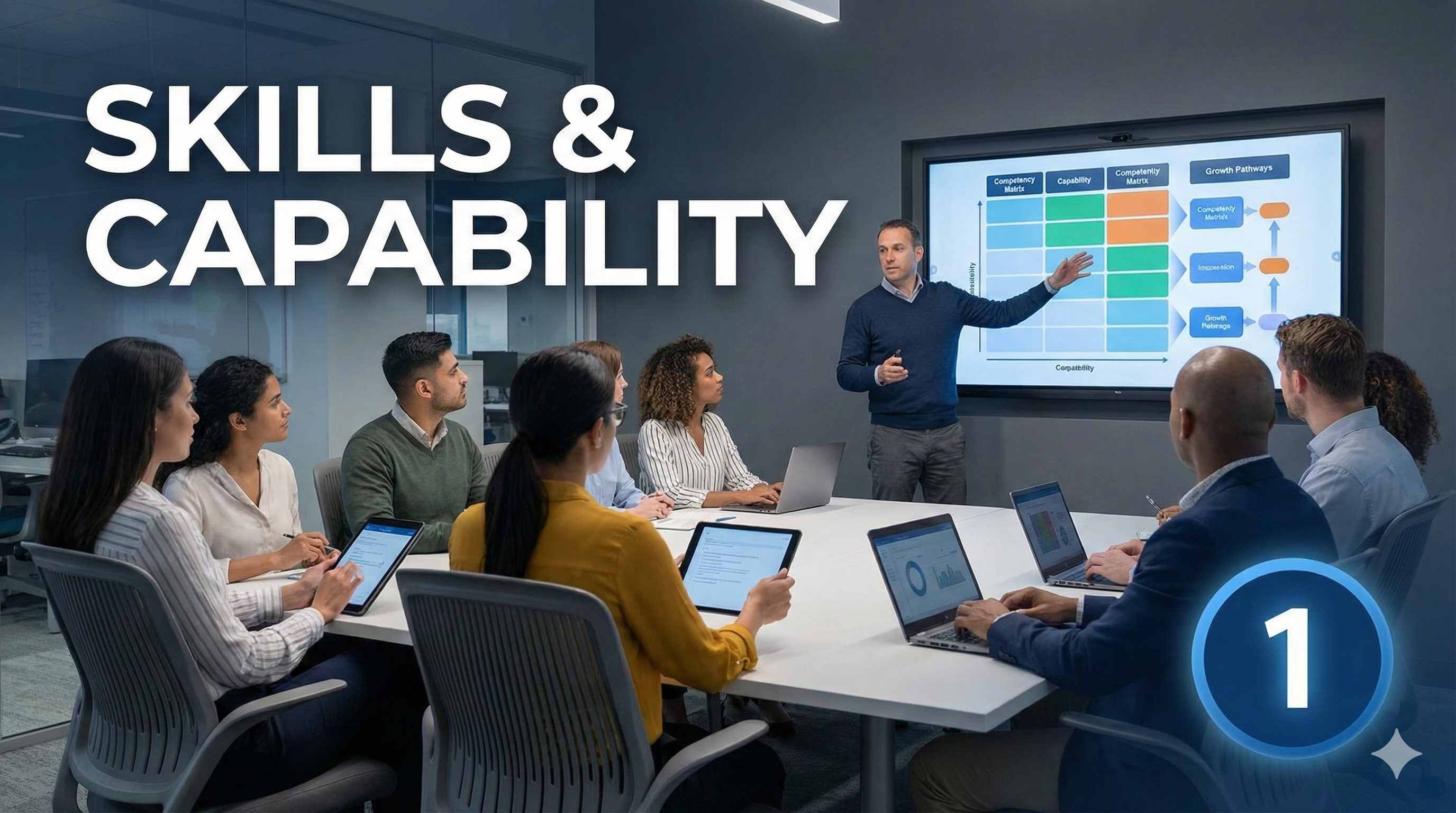
Digital Transformation (DX) isn't just about technology; it's fundamentally about people. Companies pour significant resources into new platforms and tools, yet many struggle to achieve their desired outcomes. Why? Often, it's a critical oversight in Skills & Capability Development.
In today's rapidly evolving landscape, an organization's readiness for digital transformation hinges directly on its workforce's ability to adapt, learn, and master new competencies. This isn't merely about training; it's about a strategic, holistic approach to cultivating a digital-first mindset and skillset across every level of the enterprise.
The Foundational Role of Skills in DX Readiness
Imagine building a high-performance race car but forgetting to train the pit crew. That's what many organizations do when they invest in digital tools without simultaneously investing in their human capital. The "Skills & Capability Development" pillar ensures your pit crew (your employees) is not just present but highly effective.
Drawing on insights from leading organizations and frameworks like NIST's National Initiative for Cybersecurity Education (NICE) Framework (for specific technical skills) and Gartner's Digital Dexterity model, we understand that successful DX readiness requires a blend of technical prowess, soft skills, and a culture of continuous learning.
Key Skill Areas for Digital Transformation Readiness
To truly be "DX Ready," organizations must focus on developing capabilities across several critical dimensions:
Digital Literacy & Fluency (Broad-based):
What it is: A foundational understanding of digital technologies, their impact, and how to use them effectively in daily work. This isn't just for IT; it's for everyone.
Best Practice: Implement enterprise-wide digital literacy programs, often through micro-learning modules or internal academies, ensuring everyone speaks a common digital language.
Relevance to Readiness: Ensures basic comfort and confidence with new tools, reducing initial resistance and accelerating adoption.
Data Literacy & Analytics (Decision-making):
What it is: The ability to read, work with, analyze, and communicate with data effectively. From understanding dashboards to interpreting advanced analytics.
Best Practice: Establish Centers of Excellence (CoEs) for data analytics, provide role-specific training (e.g., business users vs. data scientists), and foster a data-driven decision-making culture.
Relevance to Readiness: Transforms data from a commodity into a strategic asset, enabling agile responses and informed innovation.
Agile Methodologies & Lean Thinking (Execution):
What it is: Proficiency in iterative development, rapid prototyping, and continuous improvement, moving away from rigid, Waterfall approaches.
Best Practice: Train teams in Scrum, Kanban, and Lean principles. Start with pilot projects and scale best practices, often with internal coaches or external experts.
Relevance to Readiness: Speeds up project delivery, increases flexibility, and allows for quicker adaptation to market changes, essential for competitive advantage.
Cybersecurity Awareness & Hygiene (Protection):
What it is: Understanding digital threats and practicing secure behaviors to protect organizational assets and customer data.
Best Practice: Mandatory, regular cybersecurity training for all employees, simulating phishing attacks, and clear incident response protocols.
Relevance to Readiness: Mitigates risks associated with expanded digital footprints, maintaining trust and regulatory compliance.
Customer-Centricity & Design Thinking (Innovation):
What it is: The ability to deeply understand customer needs, empathize with their journey, and design solutions that truly add value.
Best Practice: Workshops on Design Thinking, journey mapping, persona development, and integrating customer feedback loops into product/service development.
Relevance to Readiness: Ensures that digital efforts are directed towards creating meaningful customer experiences, which is often the ultimate goal of DX.
Change Management & Adaptability (Human Element):
What it is: The personal and organizational capacity to navigate and embrace continuous change, alongside formal change management skills.
Best Practice: Leadership training on change sponsorship, resilience workshops for employees, and communication strategies that emphasize the "why" behind transformation.
Relevance to Readiness: Reduces resistance, fosters a positive attitude towards change, and builds a workforce capable of thriving in dynamic environments. (This pillar is closely related to your "Change Readiness & Culture" and "Change Mgmt & Communication" pillars!)
Building a Sustainable Capability Development Program
Effective capability development isn't a one-off event. It requires a strategic, continuous approach:
Assess & Gap Analysis: Regularly evaluate current skill sets against future needs derived from your digital vision and strategy. Identify critical gaps.
Targeted Learning Paths: Design specific training programs for different roles and departments, avoiding a one-size-fits-all approach. Leverage online platforms, bootcamps, and mentorship.
Culture of Learning: Foster an environment where learning is encouraged, rewarded, and integrated into daily work. This includes psychological safety to experiment and fail fast.
Leadership as Learners & Coaches: Leaders must model continuous learning and be equipped to coach their teams through skill development.
Measure Impact: Track not just completion rates, but the tangible impact of new skills on productivity, innovation, and project success.
Conclusion
Digital transformation is an ongoing journey, and your people are its most valuable asset. By strategically investing in Skills & Capability Development, guided by industry best practices and a deep understanding of your unique organizational context, you can ensure your workforce is not just ready for digital change, but empowered to drive it. This commitment to continuous learning is the bedrock of true Digital Transformation Readiness.